How AI Is Transforming Healthcare in Puerto Rico
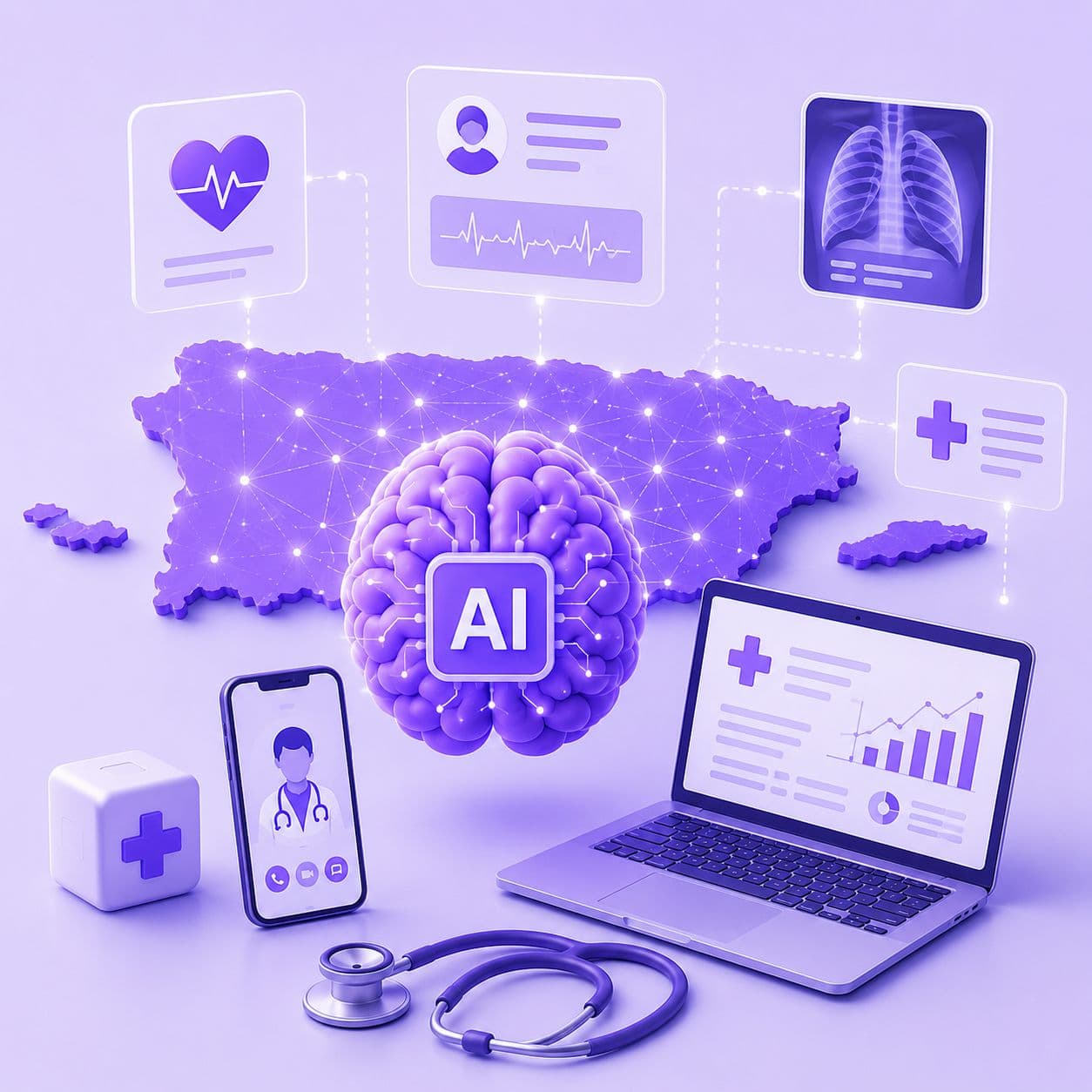
A Silent Revolution in the Waiting Room
Puerto Rico has spent decades dealing with a healthcare system under pressure: a shortage of specialists in remote municipalities, long waiting lists, and costs that exceed the capacity of many patients. Artificial intelligence won't solve everything overnight, but it is already changing the game in concrete and measurable ways.
Platforms like IslandMedPR.com and DoctorRecetas.com have shown that Puerto Ricans quickly adopt digital health services when they are well designed. The natural next step is to integrate AI into those workflows to make them smarter.
AI-Assisted Diagnosis: From Doctor to Collaborative Algorithm
Computer vision models already outperform human radiologists in detecting certain anomalies in X-ray and mammography images. Hospitals like the Puerto Rico Medical Center (UPR Medical Center) are exploring diagnostic support tools that allow physicians to receive an AI-generated "instant second opinion" before issuing their diagnosis.
This doesn't replace the doctor — it amplifies them. The physician still has the final say, but now arrives better informed for the patient encounter.
"AI is not going to take jobs away from Puerto Rican doctors. It will free them from repetitive tasks so they can focus on what truly matters: the human connection with the patient."
Local Epidemic Prediction
Dengue, Zika, and Chikungunya have cyclically struck Puerto Rico. Machine learning models trained on climate data from the National Weather Service and historical records from the Puerto Rico Department of Health can predict outbreaks weeks in advance, enabling more efficient preventive interventions.
A prototype developed at the University of Puerto Rico at Mayagüez (UPRM) achieved 82% accuracy in predicting dengue peaks using only temperature, precipitation, and public mobility data.
The Challenge: The Digital Divide and Trust
Not everything is optimism. Puerto Rico faces unique challenges for the mass adoption of AI in healthcare:
- Digital divide — About 20% of households lack reliable broadband internet access, especially in rural areas of the interior.
- Historical distrust — The most vulnerable communities, marked by decades of medical inequality, are more skeptical of technological solutions.
- Language and bias — AI models trained predominantly in English may underperform with Spanish-speaking patients or with Puerto Rico's particular Caribbean Spanish.
The Path Forward
The key is to develop solutions born in Puerto Rico, for Puerto Rico. Not to import generic models from Silicon Valley, but to adapt them — or create them from scratch — with local data, in the local language, for the conditions that most affect our population.
At Online Health PR, we believe this is possible. We are already doing it with our telemedicine platforms, and AI is the next chapter of that story.