Medical Chatbots: The Intelligent Triage Arriving in Puerto Rico
What Is Intelligent Triage?
Before a patient speaks with a doctor, they need to answer a series of questions: What symptoms do they have? Since when? Do they have allergies? Are they taking other medications? This stage, called triage, is traditionally performed by a nurse or medical receptionist.
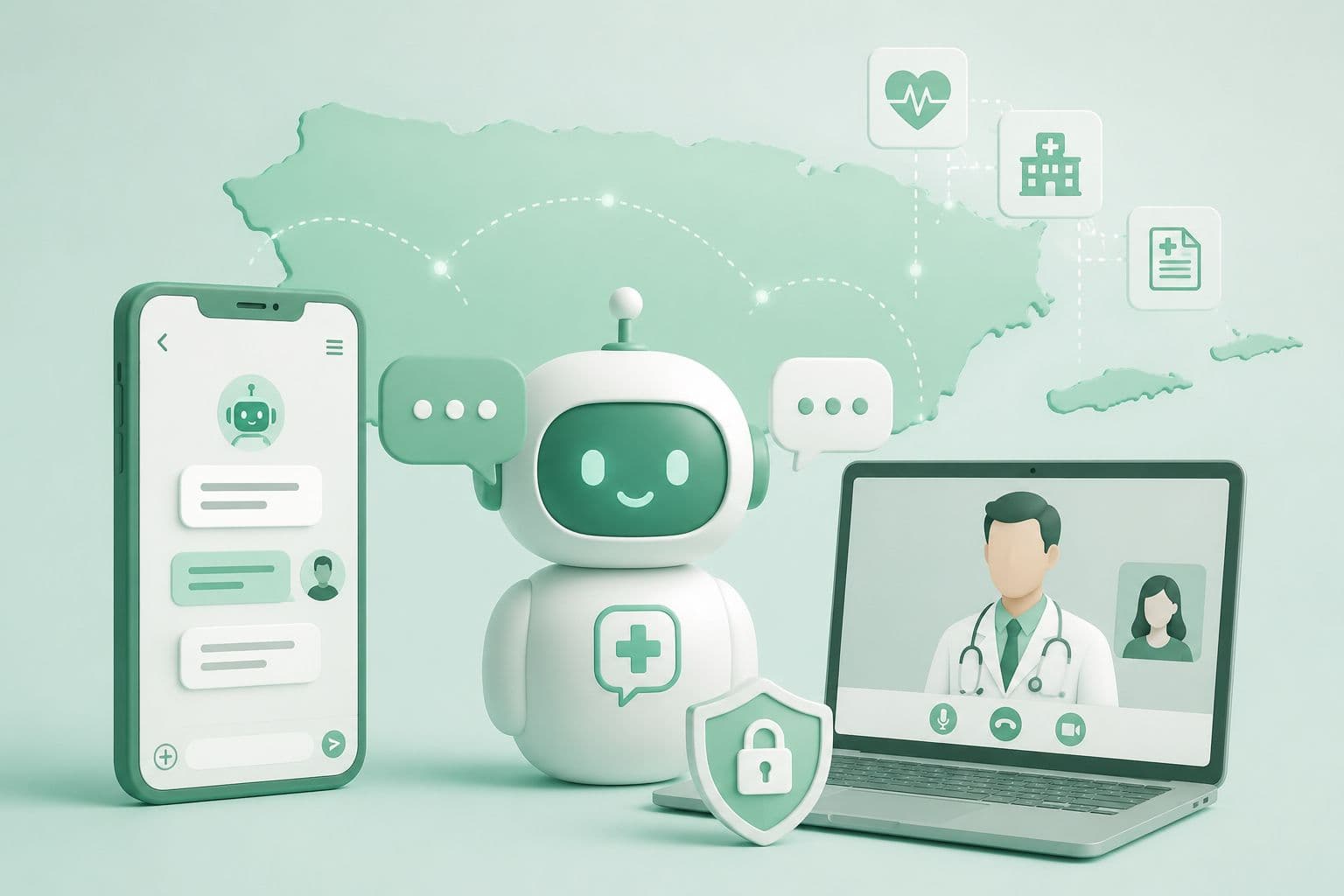
AI chatbots can do this work autonomously, at any time of day, and with a consistency that is hard to maintain in overwhelmed systems. The result: when the doctor connects, they already have a structured case summary.
Experiences on the Island
Telemedicine platforms operating in Puerto Rico have begun implementing automated pre-consultation workflows. A patient who comes in at 2 in the morning with flu symptoms can be automatically classified as "non-urgent" and receive basic guidance, while one with warning signs — chest pain, difficulty breathing — is immediately redirected to emergency care.
This is not science fiction. It is happening now.
"A well-trained chatbot does not compete with the doctor. It gives the doctor the first ten minutes of context that they would otherwise have to build themselves during the consultation."
The Technology Behind AI Triage
The most advanced systems combine three layers:
- Language models (LLM) — To understand the patient's conversational language, including Puerto Rican colloquialisms.
- Medical knowledge bases — Standardized clinical protocols (UpToDate, Merck Manual) adapted to prevalent conditions in Puerto Rico.
- Escalation rules — Deterministic logic that ensures no warning symptom goes unnoticed, regardless of how "intelligent" the model is.
Regulation and Accountability
The FDA already classifies certain medical software as regulated devices. In Puerto Rico, platforms that implement AI in the clinical workflow must ensure compliance with applicable regulations and have clear accountability mechanisms for when the system fails.
Transparency with the patient is non-negotiable: the user must always know they are interacting with an AI, not a human doctor.
The Future: Chatbots That Learn From Puerto Rico
The next leap is to train models directly with anonymized clinical data from the Puerto Rican population. A chatbot that "knows" that dengue is endemic in Puerto Rico, that type 2 diabetes has a 14% prevalence on the island (double the U.S. average), and that post-hurricane stress is a persistent mental health factor — that chatbot will be far more accurate than any generic model.